

Episode Summary:
Episode Summary:
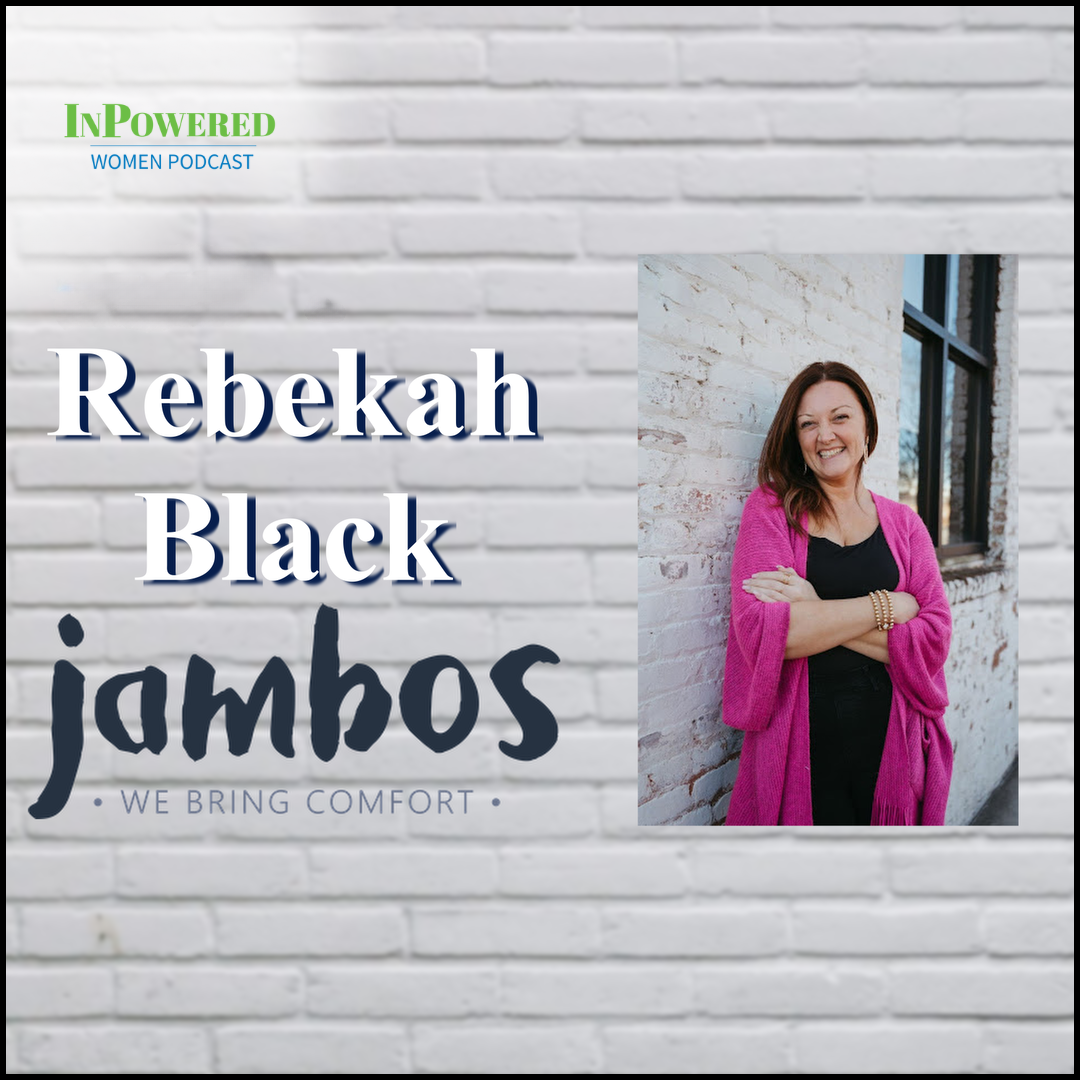
In this episode of the InPowered Women Podcast, I sit down with Rebekah Black, CEO and founder of Jambos, the nonprofit that provides brand-new pajamas to kids in foster care. Rebekah shares how a simple love of “jammies,” a lifetime of serving kids around the world, and a $12 leap of faith turned into a mission now serving 14,000–20,000 children each year. What started as a small pajama drive at church has grown into a well-oiled warehouse operation partnering with DFCS, DHS, volunteers, and UPS to deliver 88 different pajama sizes—from preemies to teens—across Georgia.
We also talk about the real behind-the-scenes of running a growing nonprofit: the impact of going viral on TikTok, the intentional decision to refocus on Georgia to rebuild systems, and her vision for what’s next, including a teen initiative and a mobile pajama warehouse on wheels. Rebekah opens up about mentorship, the loneliness of leadership, and why entrepreneurs and nonprofit founders cannot do this alone. She shares how wise mentors—and a lot of grit—shaped both Jambos and her new in-person masterclass for people ready to launch or grow purpose-driven work. And of course, we wrap with practical ways to get involved, from $10/month donations to pajama drives, volunteering, and corporate sponsorships.
Insights from this episode:
- Jambos has grown from a tiny church pajama drive to a statewide organization serving 14,000–20,000 kids each year.
- Rebekah breaks down the real-life challenges of scaling a nonprofit — including a viral TikTok moment that pushed their systems to the limit.
- Teens in foster care are often overlooked, and Jambos is building a new teen-centered initiative to change that narrative.
- The organization is exploring a mobile pajama warehouse, making it easier and faster for DFCS offices to get what they need.
- Rebekah shares the importance of small, consistent giving — emphasizing that $10 a month truly makes an impact.
- The work of Jambos is built on simplicity and excellence: One mission, done exceptionally well — brand-new pajamas for kids in care.
Quotes from the show:
- “Consistency is far more powerful than perfection — even $10 a month changes what we’re able to do for these kids.” Rebekah Black, InPowered Women Podcast
- “We want teens in foster care to know they’re seen, they matter, and they deserve comfort too.” Rebekah Black, InPowered Women Podcast
- “It’s one mission, done really well: brand-new pajamas for kids in care. That’s it — and that’s the beauty of it.” Rebekah Black, InPowered Women Podcast
- “People love to give when you make it simple. The easier you make it, the more they show up.” Rebekah Black, InPowered Women Podcast
- “Kids in tough seasons shouldn’t have to choose between comfort and dignity — we can give them both.” Rebekah Black, InPowered Women Podcast
- “When you step out on faith, you find solutions you never would’ve discovered inside your comfort zone.” Rebekah Black, InPowered Women Podcast
- “Our growth has never been about going viral — it’s been about staying faithful to the mission and the kids we serve.” Rebekah Black, InPowered Women Podcast
Sharon Lee
Sharon Lee is an accomplished entrepreneur and marketing expert dedicated to empowering female leaders. With a diverse background in sales and marketing across industries like advertising, magazine publishing, and solar energy, Sharon’s journey showcases her versatility and determination. As the principal of Pinnacle Strategic Advisors, she assists businesses in enhancing their marketing strategies. Sharon’s entrepreneurial spirit led her to establish her own consulting firm, reflecting her commitment to excellence. Alongside her professional pursuits, Sharon co-founded the InPowered Women’s networking group, fostering mentorship and support for women in business. Through the InPowered Women Podcast, Sharon will share stories of resilient female leaders with listeners encouraging them to pursue their aspirations fearlessly.
Rebekah Black
Rebekah Black is a mother, non-profit leader, foster advocate and author of children’s book, “Let’s Get Comfy!”
She is the founder of Jambos, a 501(c)(3) non-profit that has provided pajamas to over 100,000 children in foster and orphan care in over 50 states and in 18 countries since 2017.
Known for dreaming big, she is excited to see what big ideas she can come up with next.
Originally from eastern Kentucky, she now resides outside of Atlanta, GA with her three daughters and an adopted kitten named Moo.
Episode Transcript:
Sharon Lee
Welcome to the InPowered Women’s podcast, where we tell the stories of Unstoppable Female Leaders who Excel, Uplift, and Secure a clearer Path for Female Leaders in the Future. And I’m your host, Sharon Lee. Hello, and welcome to our next episode of the InPowered Women podcast. I am Sharon Lee, your host, Principal of Pinnacle Strategic and I am so excited about today’s episode.
Sharon Lee: Hi, and welcome to this episode of the Empowered Women Podcast. I am so happy that you’re here today. And before I introduce you to my guest.
Sharon Lee: I’d like to thank our sponsor for today, and that is Shance Home Improvement. So, this is a company I trust, and I talk about often, because it is the way they treat people. If you’re a homeowner in metro Atlanta, and your siding or roof is giving you that not-so-subtle hint that it needs attention, Shance is your team.
Sharon Lee: They actually communicate, they educate you through the process, and they’re one of few companies that will happily take on a repair, not just full replacements. So if you want real answers and real options that fit your home and your budget… fit your…
Sharon Lee: If you want real answers and options that fit your home and your budget, visit ShanceHomeIimprovement.com or click the link in the show notes. Okay, so check them out. And with that, I have Rebecca Black here. She is the CEO and founder of Jambos. How are you?
Rebekah Black: Hello, I’m so good, I’m so happy to be here, thank you for having me.
Sharon Lee: Of course, of course! I am so excited that you’re here. So, tell everybody what Jambo’s is.
Rebekah Black: Okay, so, Jambos, we are a non-profit organization. We provide brand new pajamas to kids experiencing foster care. So, we partner with the community to host pajama drives, and we take all those jammies, you can see some of them behind me, but we take all these jammies, and we push them out to DFACs, private agencies, and foster clothing closets
Rebekah Black: All over the place. All over the place.
Sharon Lee: Well, and you know, you’re in this little cubby here, and it looks like, oh, you’ve got a few rolled here, a few rolled there, but I have a feeling if we panned out and saw your whole warehouse, there might be a few more there.
Rebekah Black: Yes, we are currently serving anywhere from 14 to 20,000 kids annually. So, I saw the number on the board as I went back to my office a little bit ago, and it was right at 14,000 kids so far, and I think we have 6,000 in the pipeline until the end of the year. So, we do a lot of jammies around here. We know what’s up at the drama land.
Sharon Lee: Oh, my… you know, and in fact, it’s funny, so my son has come over there and volunteered and rolled jammies, at one point, and I told him I was going to be interviewing you, and he was like.
Sharon Lee: That’s a pretty serious operation over there.
Sharon Lee: That’s so funny! Yes, it is.
Rebekah Black: down to a well-oiled machine, I think. So, our team is pretty strong. They’ve got it all squared away.
Sharon Lee: Oh, I think that is so fantastic. Well, and you know, so it’s one thing to think about all those jammies going out right now, but let’s back up in the process a little bit. So, you know, what in the world made you think Jammies? And, like, where did this idea come from?
Rebekah Black: Right, yeah, so that’s always, like, the first question people want to know, like, how’d you think of this? I jokingly say, like, Jambo’s is, like, the post-it note of nonprofits, because, like, why didn’t everybody think of this? Like, it’s like… right? But, when I was… well, there’s kind of two parts to this. When I was a young girl, I overheard my parents kind of dreaming up, creating a pajama company where… like, a retailer. They were interested in designing pajamas, and they had this kind of fun pajama idea.
Rebekah Black: My mom and dad always gave us Christmas pajamas as a kid. Pajamas have always just kind of been, like, a sweet, comfy thing, and I think that’s true for a lot of families. It’s not just ours, but, like, they were kind of like a staple gift, you know? And so that kind of always stayed in the side of my head. But then, when I was about 14, 15 years old, I served in an orphanage in Kingston, Jamaica, in Montego Bay, Jamaica, and we had a chance to really get a front-row seat
Rebekah Black: seat to see what it looks like for kids to really need a resource burden. In a developing country, that’s obvious. Like, I think we all can kind of agree, like, okay, I would expect that. But then to know on stateside, you know, here in the U.S, like, there are 400,000 kids in foster care who are experiencing that same resource burden. So.
Rebekah Black: the magic sauce just kind of came together, and it was like, I want to serve kids in foster care, I have a heartbeat for kids in the orphan care space, like, what can I do? And so, the story will probably unpack a bit more in a minute, but
Rebekah Black: I went to DFACS and asked them, what do you need? And they kept saying, we need new pajamas. And I was like, yes, I can do that! I wanted to foster, I wanted to have kids in my home, but, you know, I’m a single mom with 3 daughters, and it was like.
Rebekah Black: I don’t know if that’s the best next step for me, but what can I do mentality really has gotten us to where we are. So, yeah.
Sharon Lee: Oh my gosh, I love this… this story. And so… and, you know, and you have been… you mentioned going to Jamaica, but you have had… you have been all over the world, right, doing different types of… of missions. So talk about some of the places that you’ve been, and some of where you’ve given back.
Rebekah Black: Yeah, you know, I’m from a really tiny town in, like, the foothills of the Appalachian Mountains in eastern Kentucky, and my parents always just kind of encouraged us to see the world. It wasn’t always, like, move away, but it was always, like, make sure that you go and serve people and engage other cultures and learn, like.
Rebekah Black: from people, and so I was 12 years old, building a house in Tijuana, Mexico, with my sister and my dad, which was…
Rebekah Black: crazy, sleeping in a bullring under, like, the stars. It’s nuts. We did Kingston, Jamaica as a family, Montego Bay, I worked in London at a Vacation Bible School, and then, I always had a heart to go to Africa. I wanted to go to Kenya so bad, and, finally got the opportunity to do that, and then that’s where the yarn string got pulled, and now everything is different for me. Kenya changed
Rebekah Black: everything for me. And so, I spend a lot of time in Kenya, I was in Uganda, and I’ve just fallen in love with… with Africa. So, yep.
Sharon Lee: Those are most… Well, and I love the fact that when we first met.
Rebekah Black: Nothing.
Sharon Lee: that we… we were talking about, you know, what do you do when you have one of those, you know, really bad days? And so we decided that our safe word was going to be Kenya, and if I was having that bad day, I was just gonna text you in all caps.
Sharon Lee: Yeah, and we’ve just kept with that. I love it.
Rebekah Black: It’s becoming my personality trait, I think. It’s like, it’s what I love. I love to go there. It takes a whole day to fly and get landed in Nairobi, but, it is… it’s slowly becoming, like, pajamas, Africa, I’m a mom, like, those are all the things that are starting to kind of define me, so I like it.
Sharon Lee: I think that is so fantastic. So, alright, so when you were in Kenya, tell us a little bit about what you saw.
Rebekah Black: Yeah, so, when I had the opportunity to lead 9 college girls, 19 to 21 years old, you can imagine it kind of felt like Atlanta Barbie was going to Africa. We were taking all these girls to Kenya, and…
Rebekah Black: I… they needed someone to lead the trip, and they came to me asking if I would lead the trip, and I’m like, I don’t have the money to do this, like, I can’t go to Africa, I can barely go to Kroger, you know? Like, what? And so, they were like, no, we’re in dire need of a female leader to take these women, and so, okay, I’ll do it. And so, they were able to sponsor me and send me, and my prayer when we got there, it was more of, like, a cultural trip where you go and engage the, the community.
Rebekah Black: We were very embedded in the Maasai community, or the Maasai tribe, and we had an opportunity to just get, you know, shoulder to shoulder with
Rebekah Black: differences and uniquenesses that we’d never experienced before, and we wanted to share the gospel and love on moms and kids, and okay, great, you know? But my prayer was, let us serve the women really well, and God, show me what you have next for me.
Rebekah Black: do not pray that if you’re not ready for him to do it, okay? And so while we were there, I…
Rebekah Black: I really began to realize, like, God had something next for me. I was in full-time ministry, I had left a corporate setting, go into ministry, and I thought I had hit the sweet spot, like, oh, I’m in ministry, Lord, isn’t that enough? Like, I work at a church, like, what else do you want? You know, and but then while we were there, it was just, like, evidence to me that I was gonna come back and really do what He called me to years and years and years ago, and that was serve kids in foster care or
Rebekah Black: an infant rescue center orphan care. So,
Rebekah Black: I came home from that trip, and I was just ready. And I… I said before, I’m a single mom, I had $12 in my bank account, and I went into my boss’s office and quit my job.
Rebekah Black: Do as I say, don’t do as I do.
Rebekah Black: But I… but I knew. I was, you know, I was taking a salary from the church, I was… but in my mind and in my heart and soul, like, I’m called to something different. There was a conviction there. Maybe I was sitting in someone’s dream job seat, and this wasn’t for me. I just was like, I’m convicted by this. And so, in their kindness, I went to the executive pastor, and I was like.
Rebekah Black: I’m resigning. And he’s looking at me like, huh? And I’m like, I know, it’s crazy, I didn’t have a plan, I did not know what I was doing, I wasn’t an entrepreneur, I didn’t know.
Rebekah Black: And… but I knew that I was called, and I knew I had to be obedient. So, I came home and quit my job, and that was the beginning of Jambos.
Sharon Lee: And so, okay, $12 in your bank account, no job at this point, you have a great vision, a great idea, and at that point, you had already spoken with DFACS, I mean, so you had… no, no, so that was your first step, I’m guessing, right? Just to get the lay of the land.
Rebekah Black: Right, my first step was jump completely out of the airplane, and hope and pray to God there’s a parachute somewhere. Like, it’s like, okay, I’ll just jump, yay! You know? So no, I didn’t. I had a very few interactions with… outside of, like, sponsoring a child from the, you know, the Angel Tree at church, or I had very few interactions with the Department of Family and Child Services. I didn’t understand the foster care system. I just knew I cared about it.
Rebekah Black: And what can I do was really the heartbeat for me. And so, I walked out of his office, and I went straight to lunch with the director, the regional director for our county.
Rebekah Black: And I was like, what do you need? I want to foster, I shouldn’t, and I really couldn’t in that season.
Rebekah Black: And, but I want to help. And she was like, honestly, kids need resources, like pajamas, and I was like.
Rebekah Black: I can do that.
Sharon Lee: Stop right there.
Rebekah Black: I can do that. And I was like, okay. And, that was the beginning. So, I was in a small group of women at my church, and it was right around holiday season, and I was like, let’s not exchange the scented candle, and Bath and Body Works, and let’s just get pajamas.
Rebekah Black: And we collected, that day, we collected 223 pairs of pajamas.
Sharon Lee: Wow.
Rebekah Black: Eight of us, 9 of us.
Rebekah Black: And I remember a mentor of mine, like, later down, like, 6-8 months later, said to me, what are you gonna do when this works?
Sharon Lee: And I was like, oh, what a great question!
Rebekah Black: I was like, I have no idea. I was like, wait, it’s gonna work? You think it’s gonna work?
Sharon Lee: I did the same thing I did yesterday, I have no idea.
Rebekah Black: I’m like, I guess I should come up with a plan! And from there, it really did snowball, and I mean, I make that sound like it just blew up overnight. It did not. Right, right. Right? But it snowballed, and one of the women in that group wanted to do a drive, and it just kept happening, so…
Sharon Lee: What was the timeframe of that?
Rebekah Black: So that was in 17, like, November-ish, 17, and then,
Rebekah Black: I guess, no, yeah, 17. And then that following year is when we got our 501. It was in, like, March. I was able to get our 501, established and that sort of thing. But I wanted, honest to goodness, I am so serious. All I wanted to do was serve the kids in our county.
Rebekah Black: In that season, we had 843 kids in the Gwinnett County foster care system in our region, so it’s usually a couple of counties bundled together, and that’s what the lady told me, and I was like, well, that’s a thousand people! That’s a thousand kids! If I can serve 1,000 kids a year, that’s…
Rebekah Black: That would be incredible, like.
Sharon Lee: Right?
Rebekah Black: Okay, and I was like, okay, I have a goal. 843 kids, let’s go do it. And in year one, we served 5,500 kids.
Sharon Lee: Whoa!
Rebekah Black: I know, and it was literally regular shmegular people.
Sharon Lee: And just…
Rebekah Black: We wanted to give a little more, do a little more for their community, and that’s how we got here.
Sharon Lee: I think everybody can understand exactly what you said about, you know, you’ve got someone, a child that’s displaced, and what is that thing that’s at least going to give them comfort? And, jammies are the thing. And I also know that, you know, when I’m thinking about that, I’m thinking about these little ones, like, what is right behind you, and you think, okay, you think about the preschool, or the toddlers, or babies, or
Sharon Lee: Whatever, but you’re serving all ages, right?
Rebekah Black: Yes, so we collect 44 different sizes, boys and girls, so there’s 88 SKUs, and we have, preemie, biddy, 0 to 3 months, and those are so cute, and the little unicorns and zippers. It’s just… But then also we go all the way up to men’s 2X.
Rebekah Black: Because you think about… I mean, I was a senior in high school, I’m 5’11”, like, I’m an adult, you know? And so I’m like, okay, well, a lot of the kids that we’re serving are in, you know, over the age of 13. So we’ve, learned a lot about the foster care system along the way, and we’ve learned even just recently that 25% of kids in care are over the age of 13.
Rebekah Black: And so, that’s a good number of kids, that we’re really going to be intentional about serving, but we never… we don’t want to leave them out.
Rebekah Black: And that’s very common. Teenager pajamas are the first ones requested, but the last ones received.
Sharon Lee: Right.
Rebekah Black: So, not to go off on a tangent, but our upcoming goals are to really shine a light on teenagers in foster care, how can we serve them well, let them feel seen and be known, and that sort of thing. So that’s our… that’s where we’re going next.
Sharon Lee: Well, I mean, I think it’s great, and you know, for a person that says, I’m on the non-planned plan, I love that you have these goals, and these are attainable goals, you know, these are not just, oh, well, we want to serve the world. I mean, this is… these are things that I want to start with this county, I want to go farther. But now, so, on average.
Sharon Lee: how… how do they get distributed? Because when you’re talking about a good number of jammies, it’s not like you just are throwing them in the back of a pickup truck and heading out. Like, what do you do?
Rebekah Black: Correct. So, initially, it was, you know, I was driving to different counties, and it was in my living room. This whole operation was happening in my living room, and my garage was just pajamas everywhere. And now that we’re serving at the level that we’re serving, we’ve engaged so many volunteers, we’ve created things like our fleet team.
Rebekah Black: individuals that sign up, and they say, hey, you know, maybe your son plays travel ball. And you’re like, we’re going to Valdosta this weekend, and can we stop on Friday and drop them at the DFAC’s office in that area? And we have a whole sign-up for people to volunteer that way, but we have partnered really closely with DHS, which is the Department of Health… Human Services. Like, they’re, like, all over the whole state, and now they’re a megaphone for us.
Rebekah Black: to DFACS, which is an, like, an arm of DHS.
Sharon Lee: And so they’re saying to DFAX, hey, these people at Jambo’s want to give you.
Rebekah Black: for free, brand new pajamas, all you have to do is register, and that has opened a can of worms that I am so happy about.
Rebekah Black: So, the, I think it’s 150-ish counties, all 150-ish counties are making requests, and we have, a really strong relationship with UPS.
Rebekah Black: They’re giving us a great, I don’t want to say discount, but they’re granting us a great, account, and they’re backing the UPS truck in, and they’ll take them out if they’re too far, and it’s a sweet, sweet operation. It’s really fun.
Sharon Lee: So when you’re talking about those, the department, the DHS, and you’re talking about these counties, this is in Georgia, right? But they go… but you also go beyond Georgia, right?
Rebekah Black: Yeah, so a few years ago, we went viral on TikTok. And, on a separate episode, we can talk about when a mini-brand goes mega viral, and what that does to the infrastructure of your company. I would love… I could talk ad nauseum about what that did to our operation, and again… Good answer.
Sharon Lee: bad. It’s not all… you think, oh, this is great, this is what I’ve been waiting for, but it’s also… it’s not all roses at that point.
Rebekah Black: I mean, you can’t, in your annual budget, plan for a $70,000 TikTok bath, is what I affectionately call it. I’m like, oh, great. But… and I never want to speak ill of it, because it was such a blessing. Like, we served 16,000 kids… 4,000 families, 16,000 kids in, like, 6 weeks.
Rebekah Black: So from December to January, we pushed out more pajamas than we’d ever done. And that, that created
Rebekah Black: a snowball of things. The warehouse had to be opened more, the volunteer shifts had to be managed more, the products, the supplies, the… I mean, I could go on for days about that, but that’s what got us nationwide. We were sending pajamas to Billings, Montana, and Miami, Florida, and Buffalo, New York, and Albuquerque, New Mexico. Like, it was like…
Rebekah Black: But one of our core values here at Jambos is relationship. We want, to have deep understanding of the people we’re serving. And so, if we’re doing it, there’s just three of us on staff. If we’re doing all of that.
Rebekah Black: are we… are we engaging and understanding the pressures of the foster system in Montana? No. I’m doing it. Am I doing it well? Sure, but am I doing it great?
Rebekah Black: the components that are important to our core values is, like, okay, I can’t… I can’t slip on the relationship piece.
Rebekah Black: And then that… the whole TikTok thing, I mean, blew up what operation we had. It was like, okay, we gotta go back to the drawing board. So in 2025, we brought everything home to the state of Georgia so that we could get our footing. I mean, we were a toddler nonprofit. Like, I forget that sometimes, you know?
Rebekah Black: So this year has been all about creating strong relationships with DEFACS and DHS, strong CRM platforms. What are we doing for hiring and firing processes? What are we doing? Like, that’s all important, and we just didn’t have the capacity when we were doing
Rebekah Black: All of that together.
Sharon Lee: Right.
Rebekah Black: To get it nailed down, so that hopefully someday we can scale it, and there can be Jambos in.
Rebekah Black: Charleston, South Carolina, or…
Rebekah Black: you know, Nashville, Tennessee, so…
Sharon Lee: Right, right. Yeah, get something to replicate, but you’ve got to start here.
Rebekah Black: Correct, correct. And I think that that’s something that, in the nonprofit space, we want to do it for everybody.
Sharon Lee: Right.
Rebekah Black: big visionary, we’ve got big hearts, but we also, in order for it to win, we have to have business minds. And so, you gotta think that way, and sometimes it doesn’t feel so good for the big visionary to get small for a second. Like, I was kicking and screaming, I was like, no! Don’t put it on the website! People will think we’re not serving people!
Sharon Lee: Navy.
Rebekah Black: Yeah, so I wish I had a big megaphone. Maybe this podcast will take off and people will listen so that they can learn why we did that, but we had to, and we would… we would have suffocated otherwise.
Sharon Lee: Right. Well, and I think that the bigger picture is that we need you to stay in business, you know? So, therefore, if you do have to step back, and you have to restructure, or whatever you gotta do, I think that that is fantastic. But now, you still are sending some jammies to Kenya, right?
Rebekah Black: Yes, so, every year, we do an international effort. A couple.
Sharon Lee: Okay.
Rebekah Black: So, at one point, we sent to Ukraine and Poland, when all of the things were happening there, kids were at unrest, they were being taken from one place over to another place at night, and it was like, oh, we heard those stories, and we were like, send.
Rebekah Black: Then we just partnered with Hearts for Africa, which is in Eswatini, the southern part of the continent, and they, have a school there, so we sent almost 500 pieces with those missionaries, and then, Kenya, I think January, my friend who is in Kenya will take jammies with her to the Infant Rescue Center. So, we always try to just do a little bit more, where we can.
Rebekah Black: And go outside of our reach, a couple times a year. So, yep.
Sharon Lee: I love it, I love it. Well, I always like to talk a little bit about mentorship.
Sharon Lee: I think that’s important for women in business in general, but I also find, and it doesn’t matter whether you’re talking men or women, in this situation, you know, people have different ideas of what mentorship can be. Some of it is just continuing education, it’s more training, it’s sending them out to whatever, to this conference to learn more about their trade, or whatever it may be, or maybe it’s just…
Sharon Lee: hey, come on with me, I’m going to this networking event, you need to get out there and network, or whatever. But for you, what does mentorship mean, and have you experienced it, or are you, you know, tell us a little bit about where you stand with mentorship.
Rebekah Black: Here’s the deal, you cannot do this by yourself. No.
Rebekah Black: And your brain can only do so much. I don’t care if you’re the smartest woman in the room. You’re going to need, at the barest minimum, some feedback, right? And this is a very, entrepreneurship and nonprofit space is very lonely.
Rebekah Black: Like, I think a lot of people forget how lonely entrepreneurship is. I sit in rooms with women that, you know, maybe they work outside the home, maybe they’re inside… and, like, I don’t have anything in common with some of these women. You know, I’m… I’m paying the bills at home, I’m paying the bills in my warehouse, I’m paying… I, like.
Rebekah Black: I don’t have anybody to talk to, and it can be very lonely. So if, selfishly, for no other reason, if you get a mentor just to be someone that you can soundbar with, and brain dump with, and, hey girl, are you alright, type of vibes?
Sharon Lee: Yep.
Rebekah Black: at the barest minimum, go there. But mentorship for me is I’ve had people along the way who have poured into me, and without them, Jambos would never be.
Sharon Lee: Right. I mean, having Ms. Lori, who mentored me for a couple of meetings, she was like, what are you gonna do when it works?
Rebekah Black: I would have never thought of that.
Rebekah Black: You know? And vice versa. What will you do if it doesn’t work? And what will you learn? And so mentorship is so critical. Like, you have to have at least one person in your life that is not necessarily, like, coaching you, but coaching you, you know?
Rebekah Black: Right. And I love to do that for people now, because I had a handful of people that I could, hey, can I yap with you, or pick your brain? Yeah. But, I love to share the successes, the failures, or the learning opportunities. Like, let me help you, help me help you. Like, I love that.
Sharon Lee: Yeah. So, if you don’t have a mentor, you need to have one.
Rebekah Black: And, you know what, girl, I’ll do it for you. So, just invite me out, I would love to meet more.
Rebekah Black: Yeah.
Sharon Lee: I had somebody ask me, one time when, you know, you’re… you get stressed out, and you know, you’re so close to a situation, a lot of times you probably don’t see it as clearly as someone with an outside lens, or something like that. And she said.
Sharon Lee: What is… what is rock bottom?
Sharon Lee: And, you know, and that puts a lot into perspective, because it’s like, you know, even if this initiative doesn’t work, it doesn’t mean that you have failed, it doesn’t mean that you’re closing up shop or whatever, it’s just this initiative. And so, to put those boundaries around that, how much money am I going to put toward this new product? How much… what type of infrastructure am I going to put? And then if that doesn’t work, what does that mean? You know, and so I just thought that it was like… and she just
Sharon Lee: threw that out there, what is rock bottom for you? And I’m like, whoa! So… but you do, you need somebody out there, and somebody that’ll ask you those hard questions that really make you think, not just going, oh, you’re gonna… you’re gonna make it, you’re gonna do great, because that does nothing for you, because at the end of the day, you’re still stressed out.
Rebekah Black: Correct. You know, people will… oh, I’m gonna have this… my aunt, or my cousin, or my best friend is my bad… I love those people for you. You have to have those supportive people in your life, but those aren’t… those aren’t always your coaches. Those aren’t always the people who are peeling back the first layer. They believe in you. You could tell them you’re gonna run a marathon in the morning. Yes, girl, go get it!
Sharon Lee: Go!
Rebekah Black: I don’t even know where I’m, you know? So, they’ll believe in you, kind of, no matter what, and… and that’s sweet to have. You need those cheerleaders, but you also need the people who are going to press you a little bit, stretch your muscles, grow your mindset. Those are critical. You have to have… you have to have that.
Sharon Lee: So, let’s talk about how you’re kind of putting that in action right now, because you are literally wanting to help those people that are trying to put that infrastructure together.
Rebekah Black: Yeah, I, have really had… I guess I’ve had a ton of women, specifically, come to me saying, how’d you do that?
Rebekah Black: I have always wanted to fill the blanks. I’ve always dreamt of having a business where I… and I would love to start, but I just can’t. I just can’t get started.
Rebekah Black: And honestly, you’re in your own way, right? And even with, like, the mentorship program that I’m wanting to launch and, like, the coaching I’m wanting to do, I’m a little in my way, too. I’m like, I’m over here trying to, you know, promote, like, hey, you guys should start your companies, and I’m like, I should also start mine, like, you know? Because we’re all human, right? But I think, like, hearing the story of Jambo, seeing the, you know, the successes and the learning opportunities, like, I think that that ignites,
Rebekah Black: a belief in themselves. And so, I love to, let people pick my brain. People come to me all the time, can I pick your brain? And so, I’ve started, like, a master class where you come in, and part of the time together is you’re picking my brain.
Rebekah Black: come with a list of questions and just help me with them. And then I also share some of the successful things that have helped me and Jambos along the way. Here are the top 3 things that I would recommend you have in your business. Here are the 3 steps that you need to have in order to have your identity fully, like, standing on business, as they say. Right, yeah.
Sharon Lee: And this isn’t just non-profit, either, right? This could be a for-profit business or a non-profit.
Rebekah Black: Correct. The thing about, I think people… people separate them pretty instinctual, like, it’s like, oh, well, that’s non-profit, and that’s for-profit. Honestly, it’s business.
Rebekah Black: Right, so true, so true. And, you know, I… I joked with… I was, like, a top salesperson in the country when I worked in wireless, like, my… I won a trip to Hawaii, blah blah blah blah blah, and I was… I was killing it. I could sell ice to Eskimos, like, it was crazy.
Rebekah Black: And I got done with that, and I told my parents, I’m never selling anything ever again. I will never be in sales.
Rebekah Black: Fundraising is really a lot of sales, and I’m selling an impact, I’m inviting people to be… so…
Rebekah Black: If you can do it on one, you can do it in the other. It’s just a lot of verbiage, but we can figure… we get through that stuff, but at the root, they’re very similar, yeah.
Sharon Lee: So, is this something that you are planning to do, like, once a month, or on a certain rate basis, or something like that?
Rebekah Black: Yeah, so, we had… I had my first one last month, and we had a cute… it was a great little class, and we did our, you know, our little lesson, as I call it, or whatever, but, we had a great time of just… even just the banter. I want to create the community. It’s not specific to women, it’s just kind of the audience that
Rebekah Black: keeps pressing to me. And so, but it was a lot of women in the room with big ideas, and how do I execute it? And so it will be monthly. I have, one this month coming up, and that’s,
Rebekah Black: that’s gonna be great, but, you know, I’m starting where I have with what I have. And, I think that’s something that stops a lot of people. Agreed. When I started Jambos, I didn’t have branded boxes and beautiful business cards and a website. I had heart and grit, and baby, you can’t outwork me. And so…
Sharon Lee: Right.
Rebekah Black: So I, I really want to encourage the folks who come to the class to just get started. Right. Kind of done…
Sharon Lee: And I also think that’s a difference between, sorry to interrupt you, men and women, because I think that a lot of women truly want every dot dotted, every T crossed, every, you know, everything thought through, and then, wait a minute, am I really qualified for this? Whereas men are kind of like, hey, let’s do it, let’s go. I mean, it does feel like there is a totally different way of thinking, and so it’s great that
Sharon Lee: even if you have a story to tell to men that are there, I mean.
Sharon Lee: I mean, just even being that support network and lifting them up to say, yeah, get out there and just do it.
Rebekah Black: Yeah, you know, I’m 7, almost 8 years into Jambos now, and I still don’t have all my T’s crossed and my I’s dotted. And I still discover something new every day, and that’s kind of the fun of entrepreneurship.
Rebekah Black: you have to kind of be head on a swivel, I’m ready to pivot, kind of all the time. And so, if you’re wanting it to all be laid… it’s kind of like… this is… women are listening, right? It’s kind of like when you make your birth plan, you know exactly how this… I’m going to deliver this baby is gonna go, and before you know it, it did not go that way.
Rebekah Black: It did not go that way. Like, guess what? You made it, you learned, you adapted, you shifted, and I joke about it, but entrepreneurship and motherhood are very similar.
Sharon Lee: Right? I mean…
Rebekah Black: All the things in real time, you know?
Sharon Lee: Right. Except for motherhood doesn’t have that manual that you really, you know, should have had. So, anyway, there’s that.
Rebekah Black: I think that being a good entrepreneur makes me a better mom, and being a good mom makes me a better entrepreneur, so…
Rebekah Black: Yeah, they are… they’re in tandem. I’ve watched this nonprofit grow from infancy to where we are now, and I’m excited for where she’s going, so…
Sharon Lee: It’s exciting.
Sharon Lee: Okay, that’s a really good segue right there. So let’s talk about, you know, end of year is coming up. Let’s talk about, like, what… what you do as far as December being, you know, a busy, big month for you, and then what is the vision for 2026?
Rebekah Black: Yeah, so quarter four, kind of with any nonprofit, if they’re running on this calendar year, quarter four is a lot of people feeling generous, they want to give, the holiday season has the buzz, end of year giving, so a lot of people are maybe doing their tax write-offs, preparing for, you know, the close of the year. So we see in, especially, like, late November and December, we see
Rebekah Black: there are days where I will touch every element of the brand in, like, one day. So, like, I’m distributing pajamas, collecting a check, hosting volunteers, doing a marketing campaign, and having a lunch with a prospective donor about the gala in three months. Like, it’s like, oh my god, I’m touching everything, right? Yeah. So, honestly, it’s like, buckle in in December, like…
Rebekah Black: Everyone… remember the movie, Mary Poppins, we’re like, post, everyone! Like, just… everybody just stay still! Right.
Rebekah Black: Yeah, so we have lots of really… but it also catapults us into 2026, which is coming, in some of those goals and plans that we have for the upcoming year. A big piece for us in the year coming is
Rebekah Black: creating that, teen initiative. Jambo’s is… I jokingly say Jambo’s is kind of like the Chick-fil-A of nonprofits, because we just do one thing.
Rebekah Black: You know, they’re just chickens.
Sharon Lee: You’re not great. Right, right, right.
Rebekah Black: tacos, and you’re not gonna get egg rolls, and I mean, you’re getting chicken, right? Here, we just do one thing, but we do it really well, and they do it really well. So it’s like, we just do pajamas. But there are so many components of the pajamas that we could really shine a light on, be extra hands in the foster community for, and so the teen initiative will be a new program, that we’ve kind of laid the groundwork for, but it really needs to be beefed up.
Rebekah Black: We’re gonna be on a mission to raise about 100 grand for that.
Rebekah Black: Which… Crazy. And then the next component is making this thing mobile.
Rebekah Black: I have always wanted a mobile warehouse. I dream in a different color of navy blue Sprinter vans. All I want is one of those vans that you can open the doors, and it’s, like, all pajamas around here. But I would love for us to be able to, take pajamas to the defects office. Families can meet us there, and shop our mobile warehouse.
Rebekah Black: We have a lot of opportunity to put this thing on wheels, and I would love for that to happen.
Sharon Lee: So those are the basic schools.
Sharon Lee: So, I was going to ask you about, ways people can donate, as well as what are some of your big fundraising opportunities? Because I’m thinking that anybody could, you know, send jammies, they could always send money, but what are some other things that you might not think about?
Rebekah Black: So, of course, like you said, pajamas are obviously a thing. You can volunteer in our warehouse, we have opportunities all year round. This is 365, like, we do this every day.
Rebekah Black: Obviously the money component, donating on our website, you can become a monthly donor, which we’ve never written a government grant, we’ve never had money from the, like, federal funding, we’ve never had any of that. So, all… this entire operation happens because regular people just donate monthly.
Rebekah Black: And that’s really, really important to getting this mission accomplished.
Rebekah Black: And then we have opportunities throughout the year, so there’s, like, obviously our gala, lots of nonprofits host galas, and we have a beautiful time at our gala. And we look for corporations to do sponsorships and individuals that are generous to show up to that, and then golf tournament, that sort of… that sort of stuff. So, there’s lots of ways to be a part. It’s not always
Rebekah Black: just rolling pajamas, or just donating pajamas, but we want to know your gifting. We want to know what you’re good at. Maybe it’s administrative, or events that you’re great at. We would love to plug people in.
Sharon Lee: And you’ve done some interesting things to, to get,
Sharon Lee: awareness at schools and things like that as well. Am I… is that… am I off the mark there? Is that right?
Rebekah Black: No, you’re hitting it right on.
Sharon Lee: Okay.
Rebekah Black: So, we partner with schools, churches, gyms, businesses, club ball teams, and the like.
Rebekah Black: We’ve recently did a little friendly competition with some of the high schools in the area, and the honor societies, you know, they can get, their community service hours by hosting a donation drive, and so their numbers are coming in now, and, like, one school did 225 pair, and I just got their number in this afternoon at lunch, and I was like, oh my gosh, they’re killing it! But we partnered with, you know, we’re in the Atlanta area, so Emory
Rebekah Black: Hospital is hosting a huge drive for us, and that type of thing is… but it has only been because of influence.
Rebekah Black: So, I’m not out here, like, marketing madness. It’s, you know, okay, Sharon loves Jambos, Sharon knows the CEO of
Rebekah Black: X, Y, and Z, and now she’s connected us, and it’s literally been a game of chess like that. So, I think that that’s a…
Rebekah Black: That’s a good point to make, is, like, you don’t have to have this elaborate
Rebekah Black: financial contribution. You don’t have to have this elaborate amount of pajamas that you’ve collected.
Sharon Lee: Have a box on your porch and collect a couple pair a week or a month, and bring them in. That matters to us. And so… Right.
Rebekah Black: I think that kind of stops people, too, as they think, again, that it has to be perfectly
Rebekah Black: Packaged and perfectly prepared, and it really just doesn’t.
Sharon Lee: It just doesn’t, it just doesn’t.
Rebekah Black: Yeah.
Sharon Lee: Well, and so, I usually, I usually will ask what you’d like to do, outside of when you’re working and all that, but while we are talking about donations, where… how do you donate? Like, so, I’m guessing through your website, right?
Rebekah Black: Of course, of course. So, on our website, you can become a monthly donor there, and I started Jambo’s with $12. This entire organization was birthed out of a $10 bill and two $1 bills.
Rebekah Black: And so, when we started the monthly donor program, I was like, I want anybody and everybody to be able to donate. And I get it. I’m a single mom. I’m not gonna be the girl stroking this big check. It’s not gonna happen.
Sharon Lee: But…
Rebekah Black: $10 a month matters. So I started our monthly donor program, you can find that on our website, jambosdonates.org.
Rebekah Black: And that’s where you can… I mean, you can also, you know, manipulate how much you’re giving and that sort of thing. But yeah, our donor platform is there. And then, of course, sponsorships or, hey, our organization or your business wants to sponsor, for the year, become a corporate donor, you can do that. So, yeah, it’s all on the website. Everything you need is there.
Sharon Lee: All on the website. Well, and two, if somebody does want to reach out to you, if they do want to find out more about your masterclass, or pick your brain.
Rebekah Black: All of that.
Sharon Lee: How would somebody get in touch with you?
Rebekah Black: So, on social media platforms, I’m RebeccaBlack101, so you can find me there. You can also email me, or, jump on, you know, Facebook, Instagram, and find me there. So…
Sharon Lee: LinkedIn as well.
Rebekah Black: LinkedIn as well. I’m such a professional.
Rebekah Black: Mmm.
Sharon Lee: Allegedly.
Rebekah Black: Allegedly, I know what I’m doing.
Rebekah Black: Yeah, I try so hard to be good at LinkedIn, and I’m just not, and so…
Rebekah Black: Join me on TikTok, okay?
Sharon Lee: I love it.
Rebekah Black: Yeah, and then at the end, maybe I can, like, give my contact info or something, so…
Sharon Lee: Yes, I’ll put that in our show notes, for sure, and then, but yeah, if… but for… going back to your master class, I know I’m jumping around a little bit, would they just email you if they’re interested? Yeah.
Rebekah Black: So, I have an Eventbrite, and I’ll give you the link for the show notes, and for… this is… we’re gonna do December the 12th’s class, so if you’re local to the Atlanta-Beauford area, you’re welcome to pop on and get your tickets through the Eventbrite, so…
Sharon Lee: And this is an in-person.
Rebekah Black: Oh, yes!
Rebekah Black: Okay. Yeah. I feel like there’s so much magic that happens with proximity to people. Sure. And so I… and I’m just a people person anyway, and any reason to bring donuts, please let me do it. So, yeah.
Sharon Lee: Good plan, good plan. Well, this has been such a fun conversation, and it is just so interesting, because, you know, you hear about these organizations, and you see success, but you really don’t see
Sharon Lee: you know, what the inner workings are, and what the inner personalities are, and girlfriend, you got plenty of personalities, so it’s really fun to get into all of that, but I mean, it’s really great. I mean, you’re doing great things. And again, it all came out of this $12 vision and idea, and
Sharon Lee: grit! Just, I mean, I’m gonna do it, and you have. I mean, kudos to you, well done.
Rebekah Black: Thank you. It’s been, you know, people say, well, that just kind of blew up overnight, and I’m like, it sure would! You know, but…
Sharon Lee: water!
Rebekah Black: Yeah, I know, just add water, exactly.
Rebekah Black: I, I, you know, it just has so much favor. Like, God has just been so kind to show up for us every single time, and He has a plan for this, and if…
Rebekah Black: if I just can stay, like, obedient to what he’s called me to, then this is gonna… this is gonna change a lot of lives. And, and that’s the hope. So my dad said to me one time, we hit 100,000 kids, we’d served 100,000 kids, and I called him, and I was like, Dad, we served 100,000 kids, and he said… and it, like, rocked me. He was like, when you get to heaven, there will be 105,000 kids wearing pajamas.
Rebekah Black: And I was like, ugh, I said, ugh. I did, it’s like, okay, hold my tears.
Sharon Lee: I know!
Rebekah Black: Wow, that’s… that’s a good reminder, you know, that…
Sharon Lee: Hmm.
Rebekah Black: maybe we’ll be able to show kids a little bit of love and a little bit of Jesus through pajamas. So, yep.
Sharon Lee: Aw, well, I can’t imagine a better way to wrap this up. I mean, well said. That is just such a thought to leave in such a way that
Sharon Lee: you’re impacting, and I just absolutely love it. So thank you for coming on and telling your story, and we are just so, so happy that you are able to just bring so much comfort all over, and kudos. Keep on, keep on keeping on.
Rebekah Black: Thanks, girl. I love it. Thank you for having me. It’s so fun to be around you. You’re the best.
Sharon Lee: Thank you. Alright, have a good day.
Rebekah Black: Bye!
Sharon Lee: Bye!
Thank you for listening to InPowered Women. If you like what you heard, please give us a five-star review and subscribe to the show wherever you listen to your podcast and share with those you think can benefit from this information. Please email all questions, suggestions, and compliments to sharon@pinnaclestrategicadvisors.net. The InPowered Women podcast is produced by the podcast production company and executive produced by Sharon Lee.
Subscribe to our podcast
and download each episode onSpotify, PodBean, and Listen Notes.
Thank you to this episode’s sponsor, Schantz Home Improvement: www.SchantzHomeImprovement.com